Workshops
Speaker

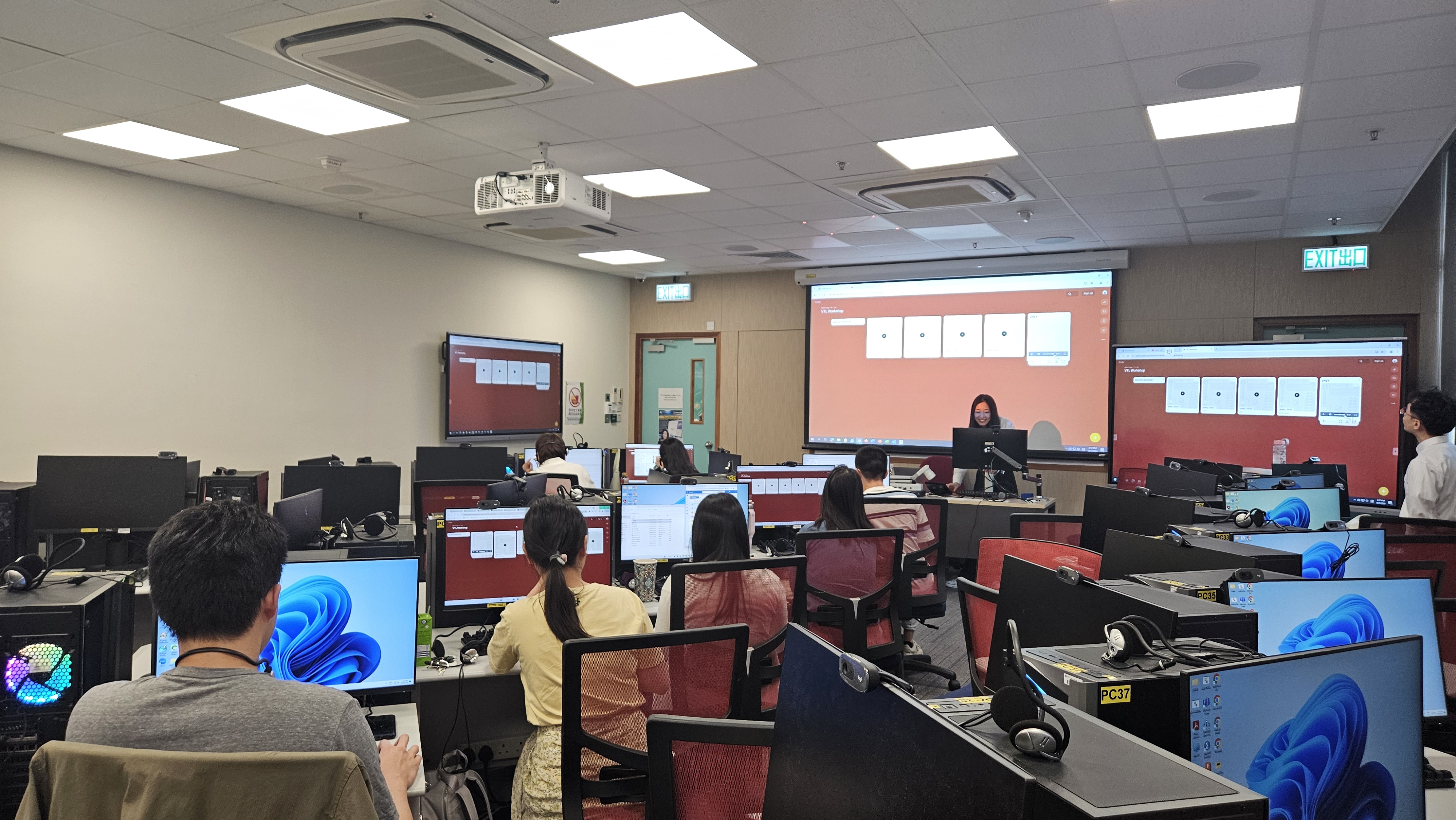
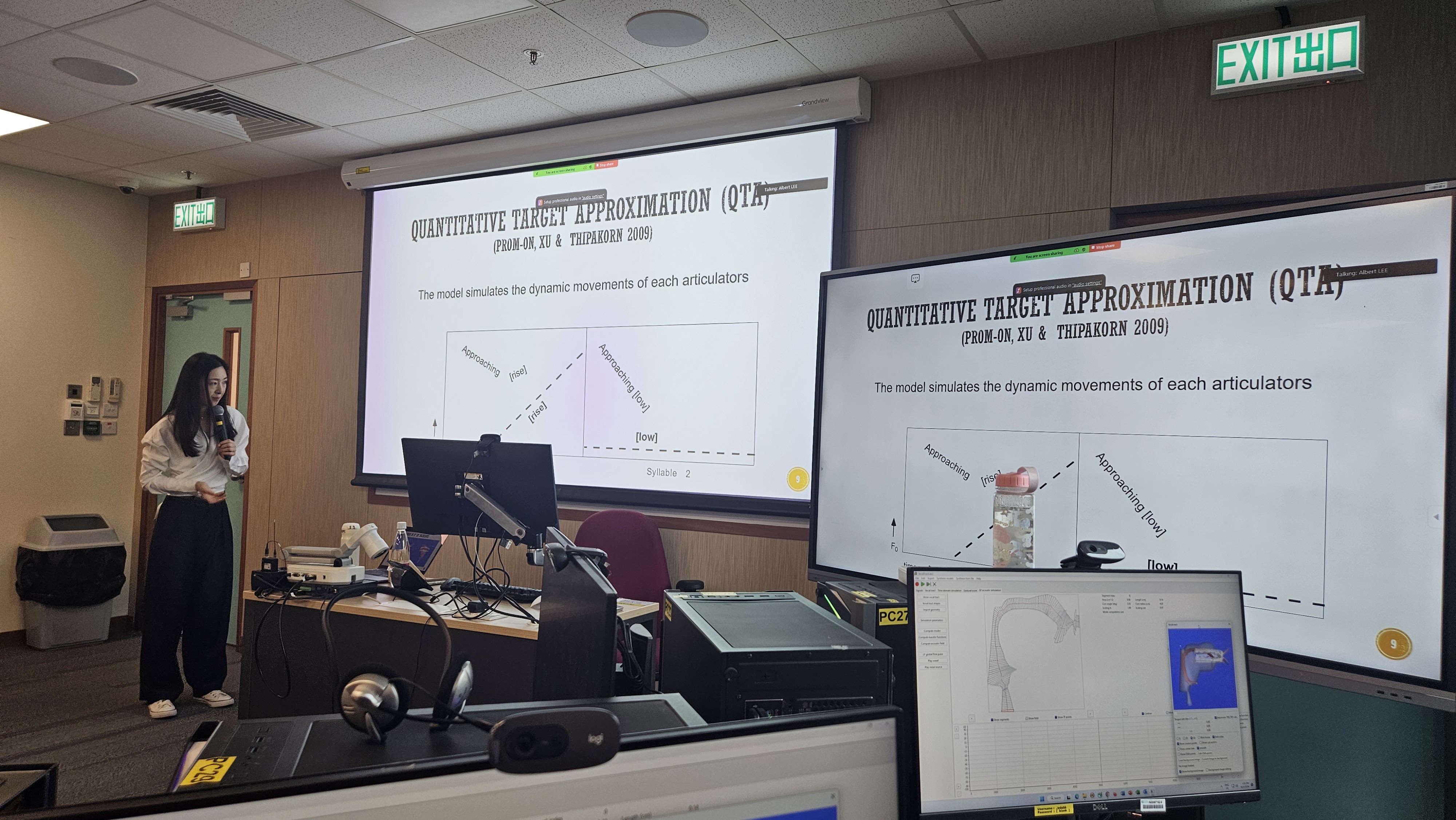
Anqi Xu is an Assistant Professor at The Harbin Institute of Technology, Shenzhen. She has extensive experience in using VocalTractLab to model speech acquisition and generate synthetic speech.
Introduction to Articulatory Synthesis Using VocalTractLab
Date: 2024 May 10
Abstract
This workshop provides a comprehensive introduction to articulatory synthesis using VocalTractLab, a 3D vocal tract model. We target linguists (including field linguists) who are interested in articulatory synthesis and speech prosody. The Workshop will start with an overview of VocalTractLab, followed by a hands-on tutorial using articulatory targets of English. By the end of this Workshop, participants will be able to use VocalTractLab (i) for articulatory synthesis and (ii) to generate speech with different prosodic features (i.e., F0, voice quality) for speech perception tasks.
Images
Video
Learnability of English Diphthongs: One Dynamic Target vs. Two Static Targets
Date: 2025 June 27
Abstract
As vowels with intrinsic movement, diphthongs are among the most complex sounds in spoken language. While traditionally viewed as either two vowels in sequence or a single vowel with shifting formants, their true nature remains debated. This study examines diphthongs from a learnability perspective using a 3D vocal tract model that simulates articulatory movements. Guided by a speech recognizer, the model learns to produce monosyllabic English words with diphthongs using either one dynamic target or two static targets. Native listeners judged diphthongs learned with dynamic targets to be generally more intelligible, suggesting that diphthongs function as unitary phonetic entities with dynamic articulatory goals, rather than as combinations of two vowels.
Video
Unveiling the Articulatory-Acoustic Link: A Simulation-based Exploration of Vowel Space
This workshop is supported by the Tin Ka Ping Education Fund.
Date: 2026 August 4
Abstract
While the acoustic vowel space has been extensively studied in previous research, little is known about the high-dimensional articulatory space of vowels. The articulatory imaging techniques are limited to tracking only a few key articulators, leaving the rest of the articulators unmonitored. In the present study, we attempted to develop a detailed articulatory space obtained by training a 3D articulatory synthesizer to learn eleven British English vowels. An analysis-by-synthesis strategy was used to acoustically optimize vocal tract parameters that represent nineteen articulatory dimensions. The results show that tongue height and retraction, larynx location and lip roundness are the most perceptually distinctive articulatory dimensions. Yet, even for these dimensions, there is a fair amount of articulatory overlap between vowels, unlike the fine-grained acoustic space. This method opens up the possibility of using modelling to investigate the link between speech production and perception.